

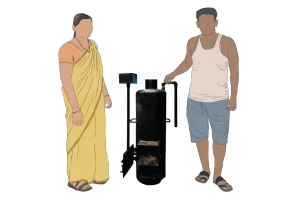
The Water Heater Project
The Water Heater Project
Communities that live in and around the forests depend on the forests for meeting their energy requirements. Sustained fuelwood extraction leads to forest degradation, which in turn affects the region’s water and ecological security, and eventually economic development. Human movement in forests for firewood collection also puts them at risk of encountering wildlife such as large carnivores, potentially causing conflict. Studies have also highlighted the negative health consequences of firewood usage, especially on women and children. A large part of the task of manual firewood collection for domestic usage is shouldered by women. The purpose of the Water Heater project is to reduce human-wildlife conflict, forest degradation, and the workload of women, through adoption of an efficient biomass-fuelled water heater by the communities.
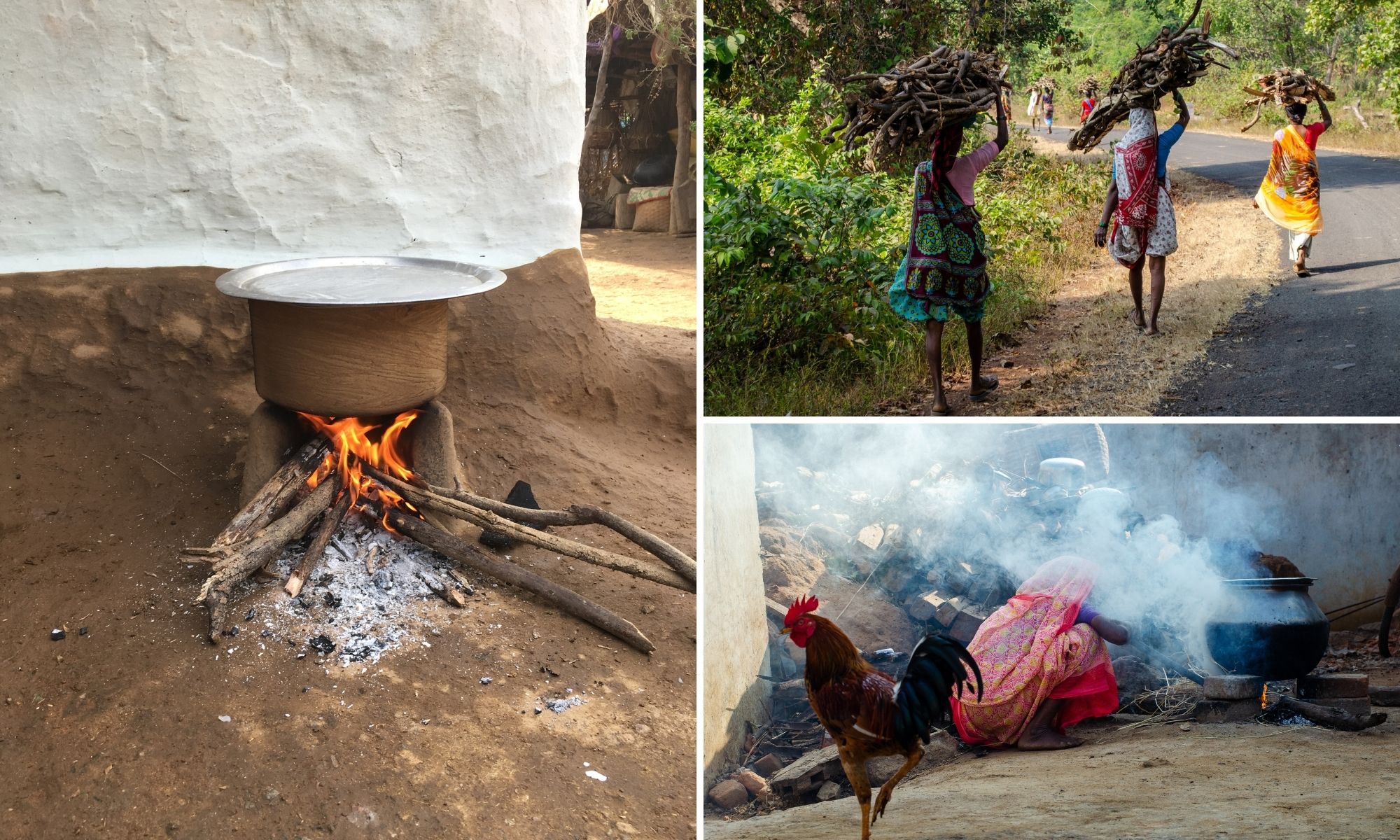
Nearly a decade of tiger-monitoring studies in the Greater Tadoba Landscape in Central India by our Conservation Research department have helped us unambiguously identify bottlenecks in the region’s wildlife corridors, and also the villages that have a high potential of negative interactions with tigers.
Subsequently, extensive economic and psychosocial studies have helped us identify one of the key drivers of forest degradation – sustained fuelwood extraction.
Our interdisciplinary research has led to the development and large-scale adoption of a biomass-fuelled, energy-efficient water heater for households, that is reducing firewood consumption, forest degradation, human-carnivore conflict, respiratory health risk and the drudgery of women.

The water heater has been customised as per the needs of a rural household. A 75 percent subsidy is provided by WCT with the beneficiary contributing the remaining 25 percent. The growing demand for the water heater indicated that it filled a critical gap and today over 200 villages have adopted the water heater in Chandrapur district, Maharashtra.
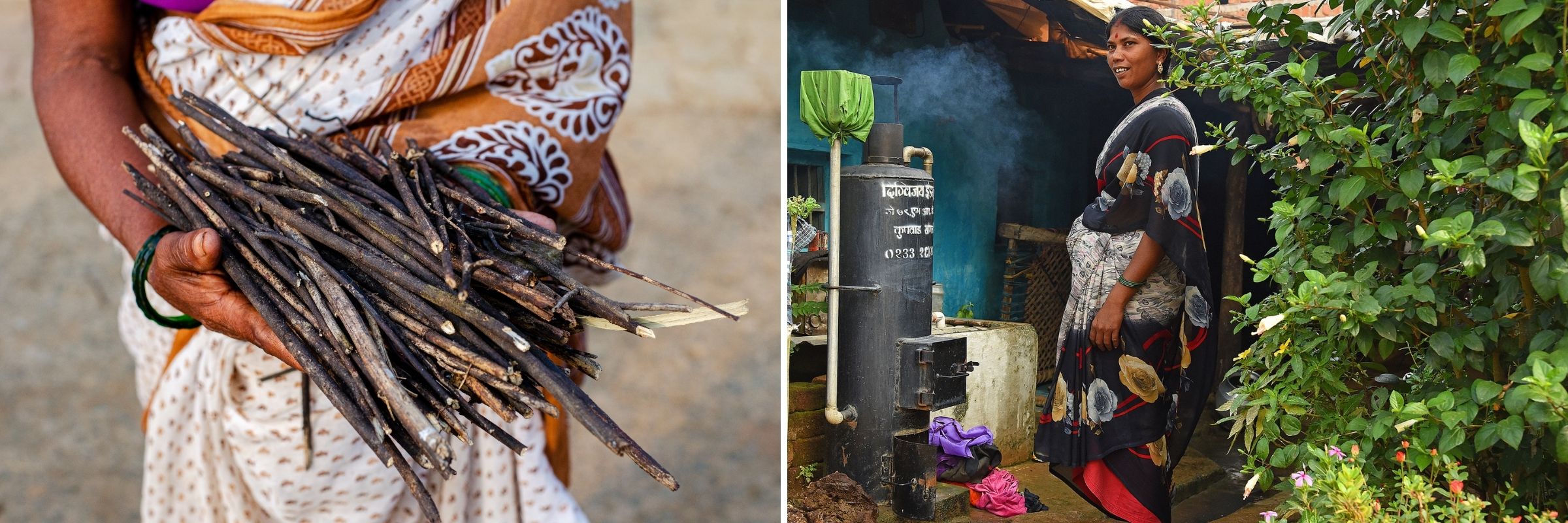
The project addresses multiple objectives as stated below:
- Reduced visitation to the forests results in lesser exposure to potentially dangerous wildlife such as large carnivores, thus reducing human-wildlife conflict.
- Enhances forest health by reducing forest degradation.
- Improves health of women due to reduced exposure to smoke and reduced drudgery.
- Reduced carbon dioxide emissions has a long-term impact on the frequency of extreme weather events, contributing to climate change mitigation.
- Healthy forests are important for mitigating climate change by storing carbon in trees and soil. Restored forests can help to increase the carbon storage potential.
- Reduced dependence of local communities on extraction-based forest resources.
- Increased free time, thereby increasing livelihood opportunity for vulnerable and marginalised people.
- Reducing interaction between large carnivores and people, and restoring forests can also help improve the relationship between humans and wildlife, which can lead to more positive attitudes towards conservation efforts.
- Forest conservation efforts can help preserve natural habitats for a wide array of species.
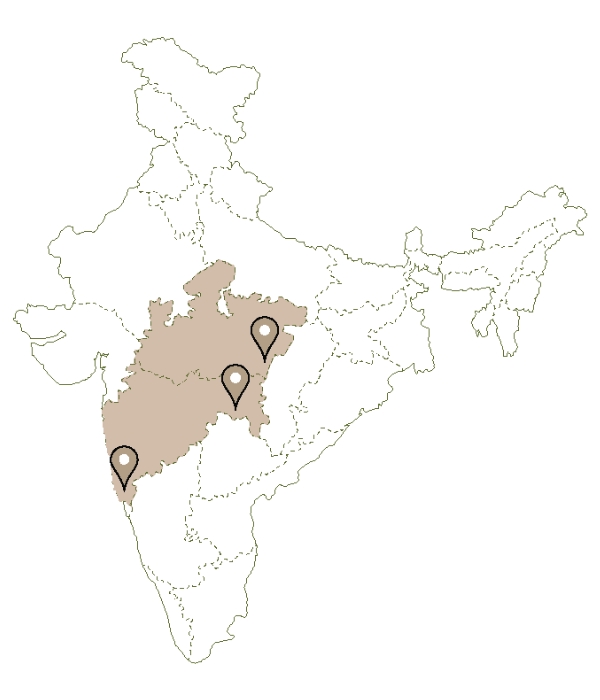
Location
Chandrapur & Dodamarg in Maharashtra; Kanha-Pench Corridor in Madhya Pradesh
Vision
To reduce dependence on fuelwood, ensure transition to cleaner fuel usage for water heating, reduce human-wildlife conflict, improve women’s health, and reduce carbon emissions.
Conservation Challenge
- Communities that live in and around the forests depend on the forests for meeting their energy requirements.
- People’s movement in forests for fuelwood collection also puts them at risk of encountering wildlife such as large carnivores, potentially causing conflict.
- A large part of the task of manual fuelwood collection for domestic usage is shouldered by women.
- Sustained fuelwood extraction leads to forest degradation, which in turn affects the region’s water and ecological security, and eventually economic development.
- Studies have also highlighted the negative health consequences of fuelwood usage, especially on women and children.
- It is thus vital to reduce the dependency of people on forests in order to arrest forest degradation by providing them with sustainable, climate-resilient alternatives.

Your donations support our on-ground operations, helping us meet our conservation goals.