
Programme Makara
Programme Makara
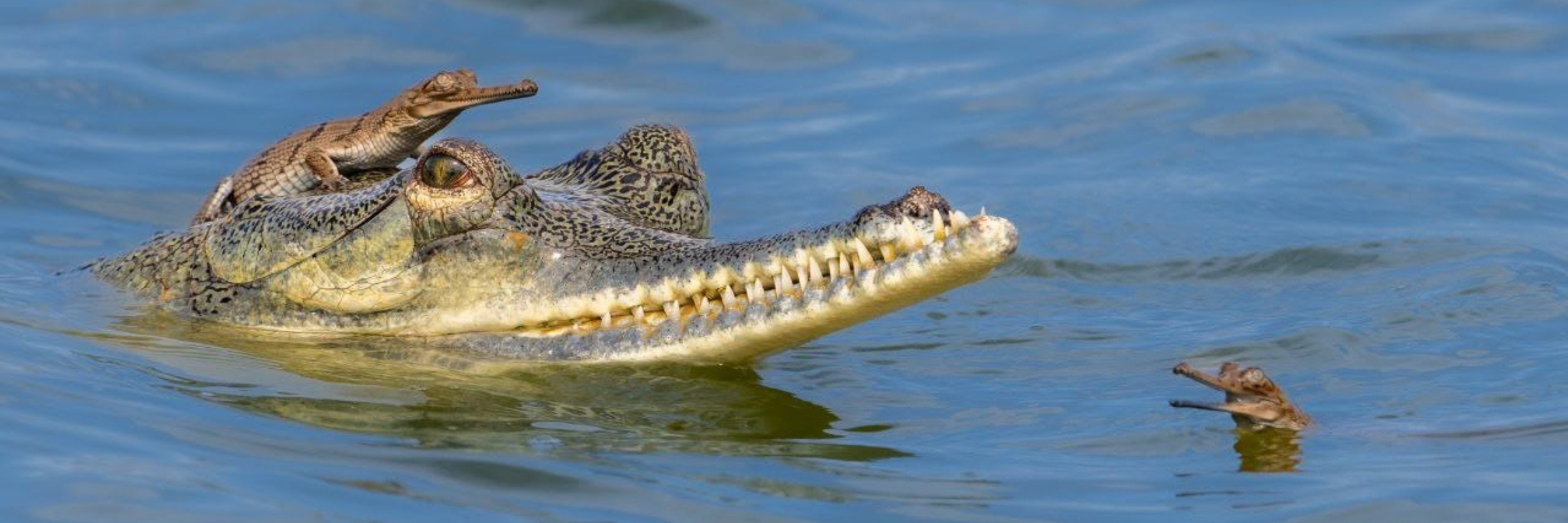
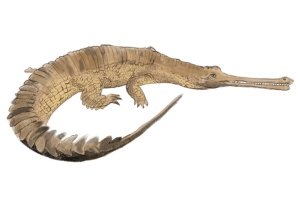
The gharial now occupies only a small part of its historic range, and remaining populations are fragmented and face threats from river regulation, fishing, sand-mining, and land-use/land-cover changes among other human activities. The species is listed as Critically Endangered (IUCN 2019), and considered to be Evolutionarily Distinct and Globally Endangered (EDGE, ZSL 2007). A number of extant and emerging threats in the form of river regulation (dams, barrages, lift irrigation projects, river linking), flow modifications (non-maintenance of dry-season ecological flows, unseasonal dam discharge), sand-mining, dynamite and gill-net fishing, and land-use/land-cover changes (agricultural expansion, ravine flattening, linear intrusions, etc.) threaten to severely limit the conservation potential of the Chambal River and the long-term prospects for the gharial and other dependent species.
The gharial is conservation dependent, and the long-term survival and persistence of populations requires site-specific interventions.
To secure gharial populations and riverscapes, WCT is
- assessing the viability of extant gharial populations and habitats
- developing effective population monitoring tools
- evaluating current management practices
- estimating ecological flow requirements in regulated rivers
- building capacity of frontline protection personnel
- engaging local communities through communication, education and awareness outreach.
In short, WCT is building a conservation roadmap for gharial conservation under its Programme Makara with an emphasis on Chambal River, and Son, Ghaghra, and Gandak Rivers.

Under this programme:
- We have surveyed over 7,000 km. along the Chambal, Parbati, Son, Ghaghara, Sharda, Gandak and Ganga Rivers so far.
- We now routinely assist the respective Forest Departments in recovering and destroying illegal nets inside the Protected Area.
- The Makara and REAL programmes conduct regular joint surveys for gharials, river dolphins, and other associated aquatic fauna.
- We participate in annual gharial and marsh crocodile surveys along with Forest Departments and other organisations.
- We have reached over 6,000 students, researchers, and frontline forest personnel through our capacity building and Communication Education and Public Awareness (CEPA) activities in these riverscapes.
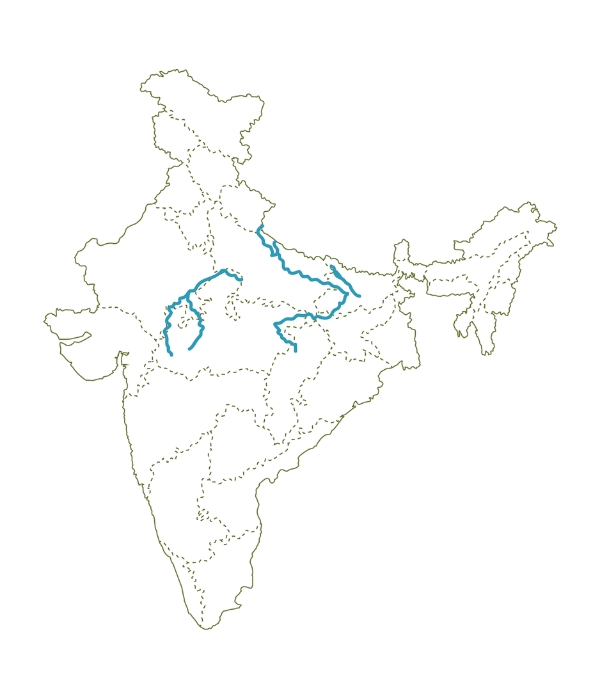
Location
Gangetic plains and rivers in Central India
Vision
To secure gharial populations and riverscapes by building a conservation roadmap for the crocodilian species.
Conservation Challenge
Gharial is listed as Critically Endangered and needs specific conservation efforts for its long-term survival.
Gharials occupy only a small part of their historic range and the remaining populations are fragmented.
Threats include:
- river regulation
- fishing
- land-use/ land-cover changes
- sand mining
- entanglement in fishing nets
Your donations support our on-ground operations, helping us meet our conservation goals.